
Quick Answer
Is PPE training required for NDIS and disability support workers? Yes, for workers who provide direct support. The NDIS Practice Standards say each worker who provides supports directly to participants must be trained, and have refresher training, in the use of personal protective equipment (PPE), and PPE must be available to each worker and participant who needs it. Under work health and safety laws, providers must also supply suitable PPE and train workers to use it. Keep records of completion and refresher dates as evidence.
In this guide
- Is PPE Training Required for NDIS Workers?
- PPE Commonly Used in Disability Support
- Employer and Worker Duties Under WHS Law
- What PPE Training Records NDIS Providers Should Keep
- Why Personal Protective Equipment PPE Training Matters
- Sentrient’s PPE Training Course: Overview
- Who Should Take This Course?
- Quick, Convenient, and Effective
- Learning Outcomes
- Business Benefits
- Additional Compliance Training Options
- Frequently Asked Questions
PPE protects disability support workers and the people they support. For NDIS providers it is also a compliance requirement, because the NDIS Practice Standards expect every worker who provides direct support to be trained, and have refresher training, in PPE use. This guide explains what that means in practice. It also covers Sentrient’s Personal Protective Equipment (PPE) Training Course, designed specifically for disability and healthcare services, which gives employees, contractors and volunteers the knowledge to use PPE safely and effectively.
Is PPE Training Required for NDIS Workers?
Yes, for workers who provide direct support. The NDIS Practice Standards include two PPE indicators in the Core module (Provision of supports environment), and the Verification module for lower-risk providers repeats the training requirement:
- Training: each worker who provides supports directly to participants is trained, and has refresher training, in the use of PPE.
- Availability: PPE is available to each worker, and each participant, who requires it.
Auditors look for evidence of both. That usually means training records with completion and refresher dates, and a way to show that PPE stock is available where supports are delivered, including in participants’ homes. Infection control training in standard precautions, such as hand hygiene, is a separate indicator covered by our infection prevention and control course.
PPE Commonly Used in Disability Support
The right PPE depends on the task, the participant and current health advice in your state or territory. Your risk assessment decides what is needed. Common examples:
| Support task | PPE often used | Points to watch |
|---|---|---|
| Personal care with possible contact with body fluids | Disposable gloves, apron or gown | Change gloves between tasks and wash hands after removing them |
| Cleaning up body fluid spills | Gloves, apron, eye protection | Follow the provider’s spill procedure and waste disposal rules |
| Supporting a participant with a suspected respiratory infection | Mask, and eye protection where advised | Follow state or territory health advice on mask type |
| Meal preparation and medication support | Gloves where the task requires | Check the participant’s support plan for specific needs |
| Supports in a participant’s home | As set by the home risk assessment | Respect the participant’s choice and explain why PPE is used |
Explain PPE to the participant before using it. Some people find masks or gloves distressing, so the support plan should record what works for them.
Employer and Worker Duties Under WHS Law
Work health and safety laws apply to NDIS providers as they do to any business:
- Providers must: supply suitable PPE that fits the worker, keep it clean and maintained, consult workers when choosing it, and give information, training and instruction on how to use, store and maintain it.
- Workers must: use PPE as instructed and not misuse or damage it.
- PPE is the last line of protection: it is used alongside safer work methods, not instead of them.
What PPE Training Records NDIS Providers Should Keep
Keep enough detail to show an auditor that each direct support worker is trained and up to date:
- the worker’s name, role and the PPE training they completed
- the completion date and the date refresher training is due
- any task-specific PPE instruction, such as for a participant with particular needs
- confirmation the worker has read the related policies
A learning management system can assign the course, send refresher reminders and keep these records in one place.
Why Personal Protective Equipment PPE Training Matters
Personal Protective Equipment (PPE) is important in safeguarding the health and safety of care providers and those they care for. Whether you work directly with individuals in healthcare settings, provide disability support, or perform roles involving potential exposure to hazards, understanding PPE is important.
Personal Protective Equipment’s primary purpose is to protect workers and maintain the dignity and respect of those receiving care. Making sure the appropriate use of Personal Protective Equipment helps create a safe, comfortable environment for everyone involved.
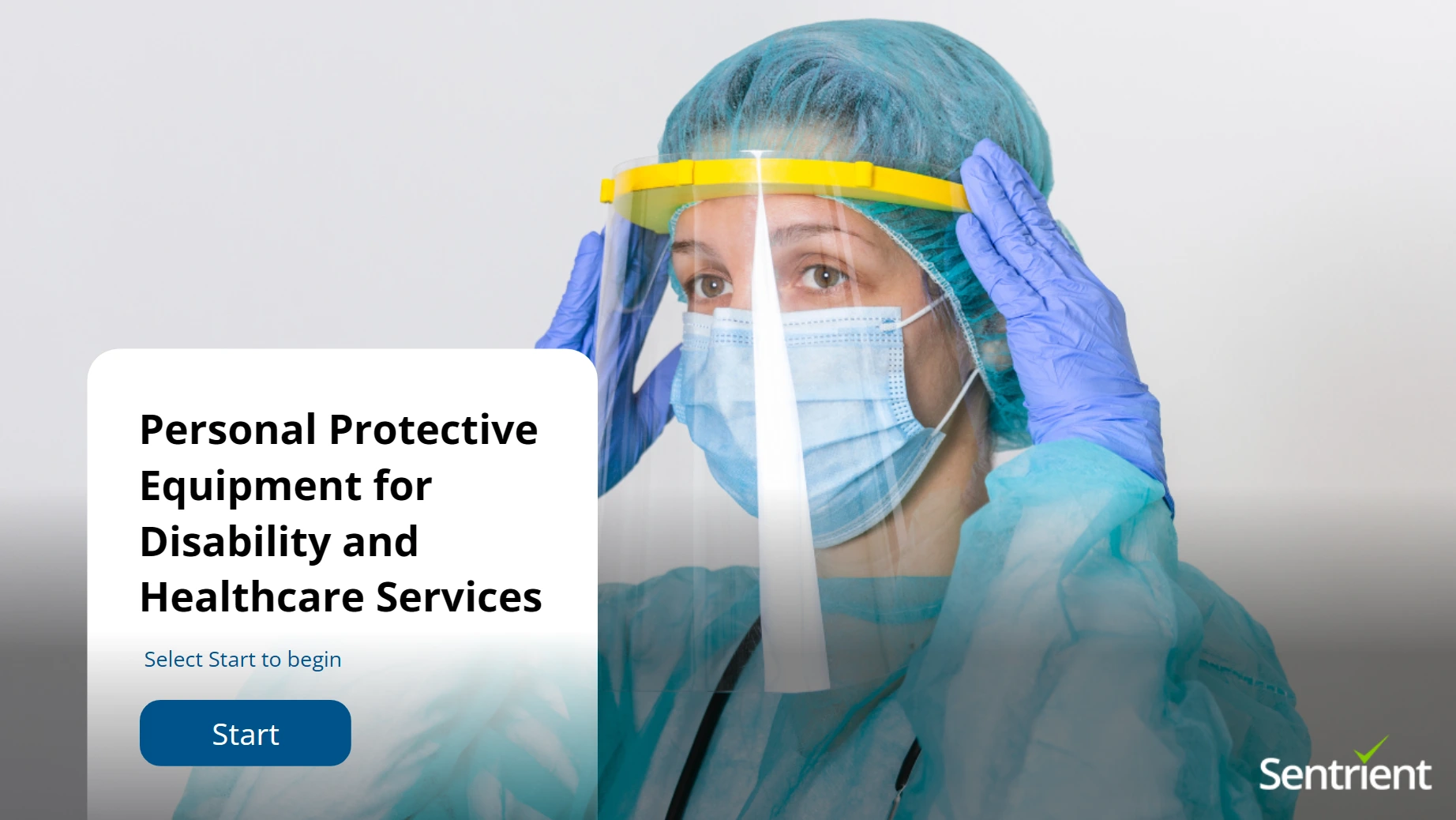
Sentrient’s PPE Training Course: Overview
This online training course covers everything from the basics of PPE to its proper usage in various scenarios. Participants will learn about:
- What PPE is and why it’s important
- How to select the appropriate PPE for specific activities
- Best practices for using and maintaining PPE
- Adapting PPE for clients with unique needs
- How to promote safety, dignity, and respect when using PPE
Who Should Take This Course?
This course is ideal for anyone in disability and healthcare services, including employees, contractors, and volunteers. Whether you’re new to the role or need a refresher, it will help make sure you use PPE correctly to protect yourself and others.
Key Topics Covered
- Understanding PPE: What it is, its importance, and when it’s needed.
- Matching PPE to Activities: Recognising which activities require specific protective measures.
- Proper Use and Maintenance: Guidelines for making sure PPE is used safely and maintained adequately.
- Adapting PPE for Clients: How to modify equipment for different individuals, making sure comfort and safety.
- Promoting Safety and Respect: How to foster a safety culture while maintaining dignity in care.
Quick, Convenient, and Effective
The course takes approximately 15 minutes, making it perfect for busy professionals. Our easy-to-navigate online platform delivers the content in a way that caters to all learning styles. Learners will participate in interactive case studies and activities that reinforce key concepts. At the end, there will be a short online assessment to evaluate their knowledge.
Learning Outcomes
Upon completing the course, learners will be able to:
- Identify what PPE is and why it is necessary
- Match the correct PPE to various activities
- Use and maintain PPE effectively
- Adapt PPE for different clients’ needs
- Promote safety, dignity, and respect within the workplace
Business Benefits
By offering this training to your staff, you will:
- Increase awareness of the correct use of PPE
- Make sure that PPE is correctly matched to activities
- Support the correct maintenance and usage of equipment
- Improve your team’s ability to adapt PPE for individual clients
- Foster a culture of safety, dignity, and respect within your organisation
Additional Compliance Training Options
This Personal Protective Equipment (PPE) course can be taken as a standalone eLearning module or as part of a broader workplace compliance program. For a complete training experience, explore related courses such as Medication Management and Restrictive Practices.
Get Started Today.
We proudly offer this important Personal Protective Equipment (PPE) training course to help keep your team safe and compliant. Contact us today for a FREE demonstration or learn more about the course. Your team’s health and safety are our top priority.
Frequently Asked Questions
Is PPE training mandatory for NDIS workers?
For workers who provide supports directly to participants, yes. The NDIS Practice Standards require these workers to be trained, and have refresher training, in the use of PPE. The requirement appears in both the Core module and the Verification module.
How often do NDIS workers need PPE refresher training?
The Practice Standards require refresher training but do not set a fixed interval. A practical approach is to set a refresher period in your training policy, such as yearly, and record the due date for each worker. Check your own policy and any guidance from your auditor.
Who pays for PPE for disability support workers?
Under work health and safety laws, the provider as the employer must supply suitable PPE to its workers. The NDIS Practice Standards also expect PPE to be available to each participant who needs it.
Does in-house PPE training count?
It can, as long as it covers the PPE used in your supports and you keep records that show each worker completed it and when the refresher is due.
Is PPE training the same as infection control training?
No. The NDIS Practice Standards list them separately. PPE training covers selecting, putting on, removing and maintaining PPE. Infection control training covers standard precautions such as hand hygiene and cough etiquette.
Sources
NDIS Quality and Safeguards Commission, Core module: Provision of supports environment
NDIS Quality and Safeguards Commission, Verification module
Safe Work Australia, PPE: WHS duties
Safe Work Australia, Personal protective equipment (PPE)
Last reviewed: October 2026
Read More About Personal Protective Equipment:
-
- New Online Competition and Consumer Law Training Course Now Available
- New Online Artificial Intelligence Awareness Training Course Now Available
- New Online Chain of Responsibility Training Course Now Available
- New Online NDIS Restrictive Practices Training Course Available Now
- New Online Working Alone Training Course Available Now









