
Quick Answer
A new employee induction checklist covers five stages: preparing before day one (workspace, IT access, welcome pack), day one (welcome, contract, tax and super forms, safety briefing), the first week (culture, role training, check-ins), month one (full training and a 30-day review) and the 90-day milestone (performance review and probation outcome). In Australia, the legal must-dos include the Fair Work Information Statement, tax file number and super details, right-to-work checks and WHS information and training.
In this guide
Research widely cited from the Brandon Hall Group (conducted for Glassdoor) found that organisations with a strong onboarding process improve new hire retention by 82% and productivity by over 70%. A clear new employee induction checklist is where that process starts.
Getting it wrong is expensive. Gallup estimates that replacing an employee can cost between half and twice their annual salary, while effective induction programs deliver a positive return on investment.
The psychology behind first impressions reveals that employees form lasting opinions about their workplace within the first week.
These initial experiences directly impact long-term retention and performance across all industries.
This practical guide provides everything you need to create an effective employee induction framework.
From pre-boarding preparation to 90-day integration milestones, we’ll cover the key elements that transform new hires into productive, engaged team members.
Sentrient’s HR management solutions help Australian businesses streamline these processes with automated workflows and compliance-ready templates.
New Employee Induction Checklist
1. Pre-Boarding (1 Week Before)
- Set up workspace with computer, equipment, and supplies
- Create user accounts, email, and system access
- Prepare welcome package with handbook and company materials
- Schedule first-day activities and assign buddy/mentor
2. Day One Basics
- Conduct welcome meeting and office tour
- Complete employment contracts and legal documentation
- Set up IT systems, login credentials, and communication tools
- Provide workplace health and safety briefing
- Introduction to team members and key personnel
3. First Week Foundation
- Share company culture, mission, and values
- Begin role-specific training modules
- Train on communication and collaboration tools
- Conduct daily check-ins and progress assessments
4. Month One Integration
- Complete full role training and assessments
- Introduction to other departments and key stakeholders
- Assign initial projects with clear expectations and early goals
- Conduct 30-day review and feedback session
5. 90-Day Milestone
- Complete performance evaluation covering skills and cultural fit
- Assess integration success and productivity metrics
- Set long-term career objectives and development plans
- Determine probation outcomes and permanent arrangements
6. Digital & Remote Considerations
- Configure core systems, security settings, and mobile access
- Set up virtual workspace and communication protocols (for remote staff)
- Provide cybersecurity training and compliance requirements
7. Legal & Compliance
- Verify work rights and collect tax/superannuation details
- Complete mandatory WHS and industry-specific training
- Check all documentation is signed and securely stored
- Give the Fair Work Information Statement, and the casual or fixed term statement if relevant
8. Success Tracking
- Monitor training completion and productivity milestones
- Collect feedback at 30, 60, and 90-day intervals
- Track retention rates and calculate ROI
What Should You Prepare Before Day One?
Pre-onboarding preparation sets the foundation for successful employee integration.
Start these tasks at least one week before your new hire’s first day to support smooth transitions and positive first impressions.
1. Workspace and Equipment Setup
- Prepare the physical workspace with necessary furniture and supplies
- Order and configure computer equipment, monitors, and peripherals
- Set up desk accessories, stationery, and personalised name plates
- Complete ergonomic assessments for health and safety compliance
2. IT Systems and Access Management
Create all necessary user accounts before arrival day. This includes email addresses, system logins, and software licences.
Configure security permissions based on role requirements and department protocols.
Generate temporary passwords and prepare welcome credentials. Test all systems to confirm proper functionality and access levels match job responsibilities.
3. Welcome Package Assembly
- Company-branded merchandise and stationery items
- Employee handbook and policy documents
- Organisational chart and team contact information
- Local area guide for office amenities and transport options
4. Communication and Scheduling
Schedule first-day activities and communicate the agenda to relevant stakeholders. Notify team members, managers, and support staff about the new arrival and their roles in the welcome process.

What Must Happen on Day One?
Day one basics create lasting first impressions and establish clear expectations.
Focus on welcome activities, key paperwork, and basic orientation rather than overwhelming new employees with complex training.
1. Welcome Ceremony and Office Tour
Begin with a warm, personal welcome from the direct manager or HR representative. Conduct a full office tour highlighting key areas including workstations, meeting rooms, kitchen facilities, and emergency exits.
Introduce the new employee to immediate team members and key personnel they’ll interact with regularly. Provide a physical or digital office map for future reference.
2. Key Documentation and Compliance
- Employment contracts signed digitally and legal agreements
- Tax file number and superannuation details
- Bank account information for payroll processing
- Emergency contact forms and medical information
3. IT Setup and System Training
Guide new employees through initial computer setup and basic system navigation. Provide login credentials for core platforms and demonstrate core software applications.
Establish communication channels including email setup, instant messaging platforms, and collaboration tools. Configure mobile devices if the role requires them.
4. Safety and Emergency Procedures
- Workplace health and safety briefing
- Emergency evacuation procedures and assembly points
- First aid locations and incident reporting protocols
- Fire safety and emergency contact information
5. Team Integration and Support
Assign a buddy or mentor to provide ongoing support and answer questions throughout the first week. End day one with informal team integration activities such as group lunch or coffee breaks.
How Do You Build Foundation in the First Week?
The first week should focus on structured learning without information overload. Implement a phased approach that gradually introduces company culture, role expectations, and operational procedures.
1. Company Culture Deep Dive
Share the organisation’s history, mission statement, and core values through interactive presentations or video content. Discuss how these values translate into daily operations and decision-making processes.
Provide insights into company traditions, social events, and team dynamics. Explain communication styles, meeting protocols, and collaborative practices specific to your workplace culture.
2. Role-Specific Training Schedule
- Role-specific training modules tailored to specific job requirements
- Gradual introduction to key responsibilities and expectations
- Hands-on practice with guidance from experienced team members
- Regular check-ins to assess progress and address concerns
3. Communication and Collaboration Tools
Demonstrate project management platforms, file sharing systems, and internal communication channels.
Provide training on video conferencing tools, calendar management, and document collaboration processes.
Set up structured one-on-one meetings with direct supervisors and establish feedback mechanisms for ongoing support and development.
What Integration Activities Work in Month One?
Month one focuses on full role training and deeper integration into team dynamics. Employees should feel confident in their basic responsibilities whilst building relationships across departments.
1. Full Role Training
Complete all job-specific training modules and competency assessments. Introduce complex processes gradually with supervised practice sessions and feedback opportunities.
Assign initial projects that allow new employees to demonstrate skills whilst contributing meaningfully to team objectives. Provide clear success criteria and support resources.
2. Cross-Departmental Introductions
- Meetings with key stakeholders from other departments
- Understanding of company-wide processes and workflows
- Introduction to clients or external partners where appropriate
- Overview of interdepartmental collaboration requirements
3. 30-Day Check-In and Review
Conduct a formal 30-day review process to assess training progress and address any concerns. Set goals for the remaining probation period and discuss career development opportunities.
Collect feedback about the induction experience to identify improvement areas for future new hires.
What Happens at the 90-Day Milestone?
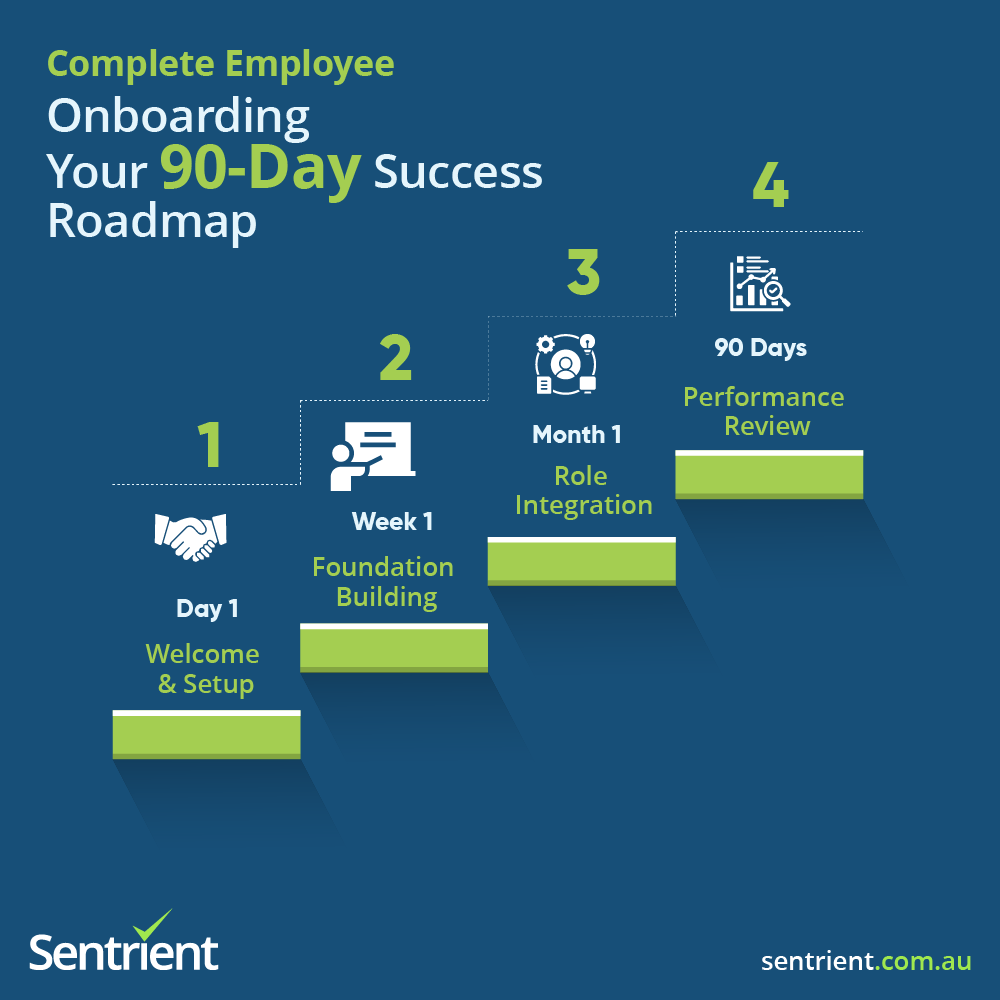
The 90-day milestone marks the transition from new employee to fully integrated team member. This period focuses on performance evaluation, long-term planning, and retention strategies.
1. Performance Evaluation and Goal Setting
Complete thorough performance reviews covering technical skills, cultural fit, and collaborative abilities. Discuss achievements, challenges, and areas for continued development.
Establish long-term development plans aligned to role expectations and both employee aspirations and organisational needs.
2. Integration Success Measurement
- Productivity metrics compared to established benchmarks
- Peer feedback and team integration assessments
- Training completion rates and competency demonstrations
- Employee satisfaction and engagement surveys
3. Future Planning and Development
Determine probation period outcomes and discuss permanent employment arrangements where applicable.
How Do You Handle Digital Integration?
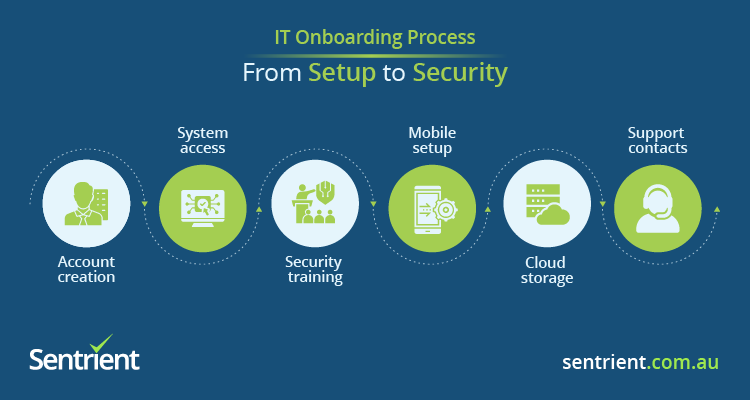
Technology integration requires a systematic approach making sure new employees can effectively utilise all digital tools and platforms required for their roles.
1. Core System Setup
Configure email signatures, calendar preferences, and communication settings. Set up cloud storage access with appropriate folder permissions and sharing protocols.
Provide training on company-specific software applications including project management tools, customer relationship management systems, and industry-specific platforms.
2. Mobile and Remote Access
- Company device configuration and security protocols
- VPN setup and remote access procedures
- Mobile application downloads and account synchronisation
- Cloud-based document access and collaboration tools
3. Digital Security and Compliance
Train employees on cybersecurity best practices including password management, phishing awareness, and data protection protocols. Check compliance with company IT policies and regulatory requirements.
Sentrient’s integrated HR management system streamlines digital onboarding with automated account provisioning and compliance tracking across all platforms.
What About Remote and Hybrid Employees?
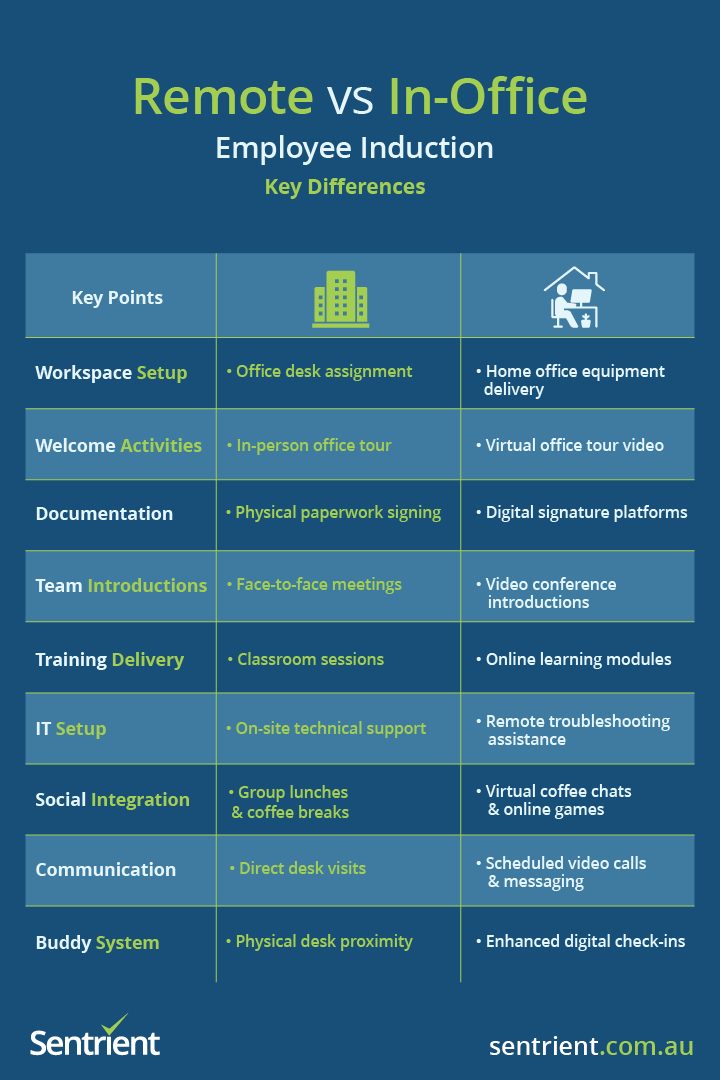
Remote and hybrid employees require adapted induction processes that maintain connection and engagement despite physical distance. Virtual integration demands enhanced communication and structured online activities.
1. Virtual Workspace Setup
Coordinate equipment delivery and home office setup before the start date. Provide technical support for internet connectivity, software installation, and hardware configuration.
Create digital welcome packages including company information, team photos, and virtual office tour videos.
2. Enhanced Communication Protocols
- Daily check-ins during the first week via video calls
- Virtual coffee chats with team members and stakeholders
- Online collaboration tool training and etiquette guidelines
- Clear availability expectations and response time protocols
3. Virtual Team Building Activities
Organise online welcome sessions, virtual lunch meetings, and team-building exercises designed for remote participation. Facilitate digital introductions through video meetings and collaborative online activities.
What Legal and Compliance Requirements Apply?
Australian employment law sets specific requirements for new starters, covering workplace policies and procedures safety, superannuation, taxation, and work rights verification. Compliance failures can result in significant penalties and legal complications.
1. Required Legal Documentation
Employment contracts must be signed and stored securely with copies provided to employees. Collect tax file numbers, superannuation obligations for new employees fund details, and bank account information for payroll processing.
Verify the person’s right to work in Australia through appropriate documentation including passports, visas or citizenship certificates. For visa holders, the Department of Home Affairs’ VEVO service confirms work conditions.
You must also give every new employee the Fair Work Information Statement before, or as soon as possible after, they start. Casual employees also need the Casual Employment Information Statement, and employees on a fixed term contract need the Fixed Term Contract Information Statement.
2. Workplace Health and Safety Training
- Mandatory WHS induction covering workplace hazards and safety procedures
- Tracking certification completion across your workforce for industry-specific safety requirements
- Emergency response procedures and evacuation protocols
- Incident reporting processes and first aid information
3. Industry-Specific Compliance
Different industries have unique compliance requirements including construction site safety, healthcare privacy regulations, or financial services certification programs. Make sure all relevant training is completed within required timeframes.
Sentrient’s compliance management system provides pre-loaded courses covering work health and safety, privacy, workplace bullying, and equal employment opportunity requirements.
How Can You Automate and Streamline Processes?
Automation reduces administrative burden whilst making sure consistent induction experiences across all new hires. Digital workflows eliminate manual tasks and provide real-time progress tracking.
1. HR Software Integration
Modern HR management systems automate task assignments, send reminder notifications, and track completion rates across all induction activities.
Integration with existing systems keeps data flowing smoothly and reduces duplicate entry requirements.
Automated workflows trigger sequential activities based on completion milestones, making sure no steps are missed whilst maintaining an appropriate pace.
2. Digital Checklists and Tracking
- Mobile-friendly checklist applications for easy access and completion
- Real-time progress monitoring and reporting capabilities
- Automated reminder systems for outstanding tasks
- Integration with calendar systems for scheduled activities
3. ROI Measurement Tools
Track time-to-productivity metrics, training completion rates, and employee satisfaction scores through automated data collection and reporting systems.
Why Do Buddy Systems Work So Well?
Buddy programs provide personalised support that complements formal training processes. Peer mentorship accelerates cultural integration whilst reducing anxiety and isolation during the transition period.
1. Mentor Selection and Training
Choose experienced employees who demonstrate strong communication skills, cultural alignment, and enthusiasm for supporting new team members.
Provide buddy training covering expectations, communication techniques, and escalation procedures.
Establish clear guidelines for mentor responsibilities including regular check-ins, practical support, and social integration activities.
2. Structured Support Framework
- Weekly one-on-one meetings during the first month
- Informal daily interactions and question-answering support
- Social activities including lunch invitations and team event inclusion
- Feedback collection and progress reporting to HR teams
3. Feedback and Improvement
Create structured feedback surveys allowing both mentors and new employees to share experiences and suggest improvements.
How Do You Prevent Information Overload?
Information overload reduces retention and increases stress levels during the critical first weeks. Structured delivery methods support effective learning whilst maintaining engagement and comprehension.
1. Phased Learning Approach
Divide information into digestible segments delivered over appropriate timeframes.
Prioritise core knowledge for immediate job performance whilst scheduling fuller training modules throughout the first 90 days.
Use interactive learning methods including videos, hands-on demonstrations, and practical exercises rather than lengthy presentation sessions.
2. Visual Learning Aids
- Infographics summarising key policies and procedures
- Process flowcharts for complex workflows and systems
- Interactive maps showing office layouts and department locations
- Quick reference guides for frequently used systems and contacts
3. Spaced Repetition Techniques
Reinforce key information through multiple touchpoints using different delivery methods. Follow initial training with summary sessions, practical applications, and regular review activities.
How Do You Adapt for Different Roles?
Role-based adaptations deliver relevant, targeted induction experiences that address specific requirements and expectations. Different employee categories require customised approaches reflecting their unique circumstances and responsibilities.
1. Contractor vs Permanent Employee Differences
Contractors require focused training on project-specific requirements, access permissions, and reporting relationships. Emphasise temporary engagement parameters whilst making sure compliance with all safety and security protocols.
Permanent employees need thorough cultural integration and long-term development planning in addition to immediate job requirements.
2. Senior Executive Adaptations
- Strategic context briefings including market position and competitive landscape
- Stakeholder introductions across all organisational levels
- Governance and decision-making process explanations
- Leadership team integration and collaborative framework establishment
3. Part-time and Casual Considerations
Adapt schedules and delivery methods to accommodate limited availability whilst making sure all key information is covered. Provide flexible access to training materials and support resources.
How Do You Measure Success?
Success measurement requires thorough tracking of multiple indicators reflecting both short-term integration and long-term retention outcomes. Regular assessment enables continuous improvement and demonstrates return on investment.
1. Key Performance Indicators
Track time-to-productivity ratios comparing new employees against established benchmarks. Monitor training completion rates, competency assessment scores, and manager satisfaction ratings.
Measure employee satisfaction through surveys at 30, 60, and 90-day intervals focusing on induction experience quality and support adequacy.
2. Retention and Engagement Metrics
- 90-day retention rates compared to industry benchmarks
- Employee satisfaction and engagement surveys reflecting workplace Net Promoter Scores
- Internal promotion rates and career progression indicators
- Absenteeism and engagement levels during probation periods
3. Cost-Benefit Analysis
Calculate total induction costs including staff time, materials, and system expenses. Compare against recruitment costs, productivity gains, and retention savings to determine overall return on investment.
What Common Pitfalls Should You Avoid?
Common induction mistakes can undermine even well-intentioned programs. Understanding these pitfalls helps organisations create more effective, engaging experiences that support long-term success.
1. Information Overload Prevention
Avoid cramming too much information into early sessions. Space learning activities appropriately and provide reference materials for future consultation rather than expecting immediate memorisation.
Focus on core knowledge first with gradual introduction of complex processes and detailed procedures over extended timeframes.
2. Communication and Follow-up Failures
- Inconsistent messaging from different team members
- Lack of regular check-ins and progress monitoring
- Poor coordination between HR, managers, and buddy systems
- Delayed responses to questions and concerns
3. Technology Setup Problems
Test all systems and confirm they work before the new employee arrives. Have technical support readily available for troubleshooting and provide alternative access methods for system failures.
4. One-Size-Fits-All Approach Issues
Recognise that capability gaps across different roles and learning styles require adapted induction approaches. Avoid rigid programs that don’t accommodate individual needs and circumstances.
Templates and Resources You Need
Effective induction programs require well-designed templates and resources that keep things consistent whilst allowing customisation for specific circumstances. These tools streamline implementation and reduce preparation time.
1. Induction Checklist Templates
Create customisable checklists covering pre-boarding preparation, day-one activities, weekly milestones, and 90-day review processes. Include role-specific variations for different positions and departments.
Provide digital formats compatible with mobile devices and HR management systems for easy access and completion tracking.
2. Communication Templates
- Welcome email templates for different stages of the process
- Manager briefing guides and preparation checklists
- Team introduction formats and meeting agenda templates
- Feedback survey questions and evaluation forms
3. Mobile-Friendly Resources
Design all materials for mobile access making sure new employees can reference information and complete tasks regardless of location or device availability.
What’s the ROI of Effective Induction?
Investment in well-planned induction programs delivers measurable returns through improved productivity, reduced turnover, and enhanced employee engagement. Understanding these benefits helps justify program costs and secure ongoing support.
1. Financial Impact Analysis
Effective onboarding system can lift new hire retention by as much as 82%, according to the Brandon Hall research cited above. The average cost of replacing an employee ranges from 50% to 200% of their annual salary, according to Gallup, making retention improvements highly valuable.
Structured induction programs reduce training costs through standardised processes and improved knowledge transfer efficiency.
2. Productivity and Performance Gains
- Faster time to full productivity
- Stronger first-year performance
- Reduced error rates and quality issues during transition periods
- Enhanced collaboration and team integration outcomes
3. Long-term Engagement Benefits
Employees who experience excellent onboarding show higher commitment levels and greater likelihood to recommend their employer. These factors contribute to improved workplace culture and reduced recruitment needs.
How Do You Future-Proof Your Process?
Futureproofing keeps induction programs effective as workplace expectations and technology capabilities evolve. Regular updates and flexibility enable adaptation to changing circumstances and emerging best practices.
1. Technology Integration Trends
Emerging technologies including artificial intelligence, virtual reality, and mobile applications offer new opportunities for engaging personalised induction experiences.
Stay informed about HR technology developments and assess integration opportunities that enhance rather than complicate existing processes.
2. Workforce Expectation Changes
- Increased demand for flexible, personalised experiences
- Greater emphasis on cultural fit and values alignment
- Enhanced focus on career development and growth opportunities
- Preference for digital, on-demand learning resources
3. Scalable Framework Design
Create flexible systems that accommodate growth whilst maintaining quality and consistency. Regular reviews keep the process effective and relevant.
Establish feedback loops with employees, managers, and stakeholders to identify improvement opportunities and emerging requirements.
Conclusion: A Better Start for Every New Hire
A well-built new employee induction checklist transforms first-day nerves into confident productivity.
From pre-boarding preparation through 90-day integration milestones, each element contributes to long-term success and retention.
The most effective programs combine structured processes with personalised support, making sure every new hire feels welcomed, prepared, and valued.
Technology integration streamlines administrative tasks whilst maintaining the human connections that drive engagement.
Sentrient’s integrated HR management solutions help Australian businesses implement these strategies effortlessly.
Our automated workflows, compliance-ready templates, and mobile-friendly platforms deliver consistent, engaging induction experiences that drive results.
Ready to transform your employee induction process?
Discover how Sentrient’s innovative HR technology can help your organisation implement these best practices efficiently whilst making sure compliance with Australian workplace requirements.
Take action today: Partner with Sentrient for automated employee onboarding solutions that save time, improve retention, and create lasting positive impressions from day one.
Frequently Asked Questions About Employee Induction Checklists
1. What is the difference between onboarding and induction?
Induction covers the first few days introducing company basics. Onboarding is the broader 3 to 12 month integration process. For a full onboarding checklist from preboarding to 90 days, see our employee onboarding checklists.
2. How long should employee onboarding take?
Thorough onboarding spans 90 days: Day 1 basics, Week 1 foundation, Month 1 integration, and 90-day review.
3. What should be included in a new employee induction checklist?
Key items include workspace setup, IT access, safety training, company culture introduction, and legal documentation.
4. Do remote employees need different onboarding processes?
Yes, they require virtual tours, digital welcome packages, and enhanced online communication protocols.
5. What are the legal requirements for employee onboarding in Australia?
Employers must give the Fair Work Information Statement (and the casual or fixed term statement where relevant), provide WHS information and training, collect tax file number and super details, and check the person’s right to work in Australia.
6. How do you measure successful employee onboarding?
Track time-to-productivity, satisfaction scores, retention rates, and training completion percentages.
7. What technology tools help with modern onboarding?
HR management systems, digital signatures, learning platforms, and mobile applications are key tools.
8. How can small businesses create effective onboarding programs?
Use digital checklists, assign mentors, make the most of free tools, and focus on consistent communication.
Sources
Fair Work Ombudsman, Information statements (Fair Work, casual and fixed term)
Gallup, This Fixable Problem Costs U.S. Businesses $1 Trillion (cost of replacing an employee)
Brandon Hall Group research for Glassdoor on onboarding, as widely cited (82% retention, over 70% productivity)
Last reviewed: October 2026
This article is general information, not legal advice. Employment obligations can change, so check current requirements with the Fair Work Ombudsman or a qualified adviser.









