
Quick Answer
Why is food safety and handling training important? It teaches staff to handle, store and prepare food without contaminating it, which protects customers and the business. In Australia it is also a legal requirement for many food businesses. Under Food Standards Code Standard 3.2.2A, food handlers who handle unpackaged, ready-to-eat, potentially hazardous food must be trained before they start, and the business needs a certified food safety supervisor. Foodborne illness costs the Australian economy around $3 billion a year.
In this guide
- What is Food Safety and Handling Training?
- Food Handler Training Requirements in Australia
- Top 5 Reasons Why Food Safety and Handling Training is Important
- 7 Factors to Consider When Choosing a Food Safety and Handling Training Program
- Sentrient’s Food Safety and Handling Training Course
- Conclusion
- Frequently Asked Questions
Adhering to food safety practices is important for the well-being of individuals and the overall health of society. Proper handling, storage, and preparation of food helps prevent contamination, keeping your employees and consumers safe.
Businesses that prioritise food safety and employee food safety training not only comply with regulations but also build trust with their customers and clients. Without proper training, employees may unknowingly contribute to foodborne illnesses, leading to serious health risks.
A strong food safety culture makes sure a safer work environment and reduces risks across food production and service operations. Understanding hygiene protocols, correct food handling methods, and industry safety standards is important in preventing contamination.
In this blog, we will explore the importance of food safety and handling training, what Australian law requires, and how it helps you maintain compliance, improve efficiency and protect your business reputation.
What is Food Safety and Handling Training?
Food Safety and Handling Training is a structured program designed to equip individuals with the important knowledge and skills for safe food handling.
It covers key aspects such as personal hygiene, contamination prevention, proper food storage, and effective cleaning procedures. These practices help maintain food quality and reduce risks to public health.
This training makes sure that food is handled in compliance with regulatory standards, preventing foodborne illnesses and contamination.
It teaches employees the importance of following hygiene protocols and safe handling techniques.
Businesses benefit from improved operational efficiency and adherence to legal requirements, safeguarding their reputation and customer trust.
Employees gain confidence in handling food correctly, minimising waste and enhancing overall safety.
Food Handler Training Requirements in Australia
Since December 2023, Food Standards Code Standard 3.2.2A has set national training rules for food service, catering and related retail businesses. Each food handler who handles unpackaged, potentially hazardous food that is ready to eat must, before they start that work, have completed a food safety training course or have adequate skills and knowledge in food safety and hygiene.
Under the standard, a food safety training course must cover four topics:
- safe handling of food
- food contamination
- cleaning and sanitising of food premises and equipment
- personal hygiene
What each type of business needs:
| Requirement | Category one (for example restaurants, cafes, caterers, takeaways) | Category two (for example supermarket delis and service stations selling ready-to-eat food) |
|---|---|---|
| Trained food handlers | Required | Required |
| Certified food safety supervisor | Required | Required |
| Records of key food safety controls | Required | Not required by this standard |
A business that does both category one and category two activities is treated as category one.
The food safety supervisor must hold a certificate from a registered training organisation, or an organisation recognised by the relevant food regulator, obtained within the past five years. They must also be reasonably available to advise and supervise food handlers.
The standard sets no fixed refresher period for food handlers, but their skills and knowledge must stay adequate and up to date. Food Standards Australia New Zealand (FSANZ) says businesses can recognise prior learning, such as in-house training or a food safety induction completed at another food business, and can keep training records to show authorised officers that the requirements are met. State and territory food laws also apply, so check your local regulator’s rules as well.
Top 5 Reasons Why Food Safety and Handling Training is Important
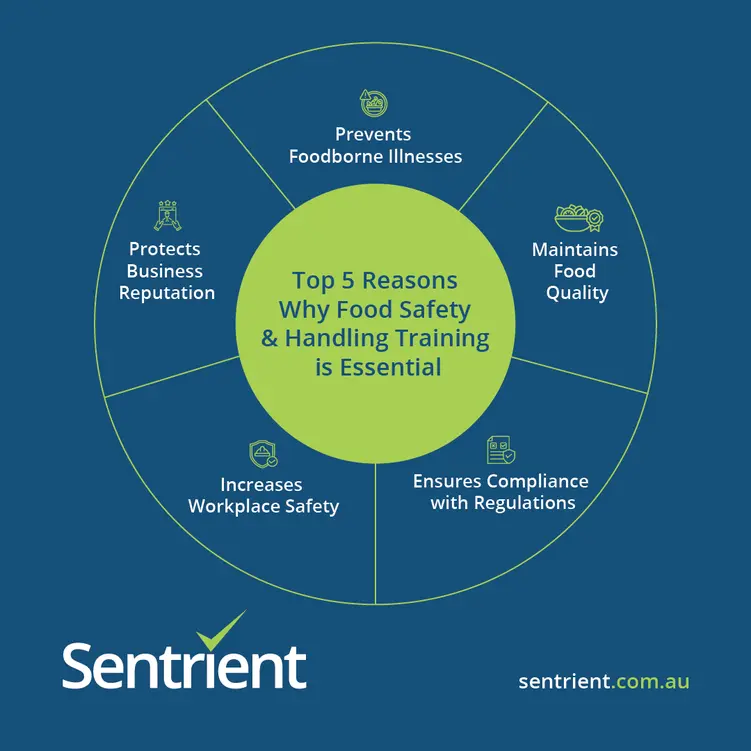
1. Prevents Foodborne Illnesses
Proper training means food is handled safely, reducing bacterial contamination and lowering the risk of food poisoning.
The scale of the problem is large. A study by FSANZ and the Australian National University estimated 4.67 million cases of foodborne gastroenteritis in Australia each year, leading to about 47,900 hospitalisations and 38 deaths.
Employees learn safe preparation, cooking, and storage techniques to prevent common foodborne illnesses. Regular training updates help staff stay informed about evolving food safety standards and best practices.
2. Supports Compliance with Food Safety Laws
Businesses must follow strict food safety laws to meet legal requirements and avoid penalties. In Australia that includes the training and supervisor rules in Standard 3.2.2A, set out in the requirements section above.
Training helps employees understand these regulations and implement necessary food safety practices in daily operations. Compliance reduces the likelihood of legal issues and makes sure businesses maintain their operating licences.
3. Maintains Food Quality
Correct storage, handling, and preparation techniques preserve food’s nutritional value and freshness. Well trained staff minimise spoilage and make sure food remains safe for consumption.
Consistently following best practices improves customer satisfaction by delivering high quality food products.
4. Protects Business Reputation
Food safety violations can lead to negative publicity, financial losses, and customer distrust. Investing in training helps maintain high safety standards and protects a business’s credibility in the industry.
A strong reputation for food safety can increase customer loyalty and attract new business opportunities.
5. Increases Workplace Safety
Training covers personal hygiene, potential cross contamination, safe food storage, proper cooking techniques and more.
Employees learn to follow safety protocols, creating a secure and hygienic work environment. Reducing potential foodborne illnesses improves employee well-being and maintains operational efficiency.
7 Factors to Consider When Choosing a Food Safety and Handling Training Program
Selecting the right training program is important to making sure food safety compliance and effectiveness. Here are key factors to keep in mind:
1. Accreditation and Compliance
The program should comply with Australian food safety standards and be recognised by relevant authorities. For food handlers, it must cover the four topics Standard 3.2.2A lists. A food safety supervisor needs a certificate from a registered training organisation or a recognised body. This makes sure that the training aligns with legal requirements and industry best practices.
2. Course Content
A well structured program should cover hygiene, contamination prevention, food storage, and regulatory compliance. Complete content makes sure participants gain a thorough understanding of safe food handling practices.
3. Training Format
Options include online, in-person, or blended learning, depending on convenience and industry requirements. Choosing the right format helps participants engage effectively and retain important knowledge.
4. Industry Relevance
Different food sectors have unique safety requirements, whether in hospitality, retail, or manufacturing. A program tailored to specific industries makes sure that employees receive training applicable to their work environment. For venues, our LMS for hospitality sets out how food safety training sits beside RSA and food safety supervisor records.
5. Certification and Validity
The training should provide a recognised certificate with a clear validity period. Certification demonstrates compliance and makes sure employees stay updated with industry standards.
6. Trainer Expertise
Instructors should be experienced professionals with extensive knowledge of food safety regulations. Expertise in the field enhances the learning experience and provides valuable industry insights.
7. Cost and Accessibility
Course fees, duration, and accessibility should align with individual or business needs. Comparing options helps find a program that balances cost with quality training.
Sentrient’s Food Safety and Handling Training Course
Sentrient provides an online Food Safety and Handling Training Course designed to educate employees, contractors, and volunteers on best practices for food safety.
The course, which takes approximately 15 minutes to complete, covers important food handling aspects to help organisations prevent contamination and make sure compliance.
Key Topics Covered:
- Importance of Food Safety: Understanding the impact of safe food practices on public health and business operations.
- Personal Hygiene Requirements: Following cleanliness standards to prevent foodborne illnesses.
- Preventing Food Contamination: Identifying and mitigating risks in food handling processes.
- Safe Food Storage Practices: Implementing best practices for food preservation.
- Cleaning vs. Sanitisation: Understanding the difference between cleaning methods for maintaining a hygienic environment.
- Food Handling in Various Settings: Adapting safety practices to different food service industries.
Completing this training enables participants to implement effective food safety measures, reducing risks and making sure adherence to food safety laws.
Conclusion
Food Safety and Handling Training is a fundamental practice that safeguards public health, enhances business reputation, and makes sure compliance with regulations.
Proper training provides employees with the skills to maintain hygiene, handle food correctly, and prevent contamination, which contributes to a safer food environment for businesses and consumers.
Implementing effective food safety measures reduces risks and makes sure operational efficiency.
A well-trained workforce can maintain compliance with food safety laws, protect brand reputation, and build customer trust.
Businesses that prioritise food safety training create a positive impact on the industry and set high operational standards.
To learn more or enrol in Sentrient’s Food Safety and Handling Training Course, contact us today.
Equip your team with the necessary knowledge to handle food safely and uphold the highest food safety standards in your organisation.
Frequently Asked Questions
1. What is food safety and handling training?
This training educates individuals on proper methods to prepare, store, and serve food to prevent contamination and foodborne illnesses.
2. Why is food safety training important?
It makes sure that food handlers understand how to minimise risks of foodborne diseases, maintain hygiene standards, and comply with legal requirements.
3. Who needs to undergo food safety training?
Anyone involved in the preparation, storage, or service of food, including restaurant staff, caterers, and food manufacturers.
4. What topics are covered in food safety training?
Subjects typically include personal hygiene, cross-contamination prevention, temperature control, cleaning and sanitising procedures, and allergen management.
5. Is food safety training legally required?
Yes, for many food businesses. Since December 2023, Standard 3.2.2A has required food handlers in category one and category two businesses who handle unpackaged, ready-to-eat, potentially hazardous food to be trained before they start, and the business must appoint a certified food safety supervisor. State and territory rules also apply.
6. How often should food safety training be updated?
The standard sets no fixed refresher period for food handlers, but their skills and knowledge must stay adequate and up to date, so regular refresher training is good practice. A food safety supervisor certificate must have been obtained within the past five years.
7. What are the consequences of not having food safety training?
Non-compliance can lead to legal penalties, foodborne illness outbreaks, damage to business reputation, and financial losses.
8. Can food safety training reduce food waste?
Yes, proper training helps in understanding correct storage and handling, thereby minimising spoilage and waste.
9. How does food safety training protect customers with allergies?
It educates staff on identifying allergens, preventing cross-contact, and responding appropriately to allergic reactions.
10. What is the role of a Food Safety Supervisor?
A designated individual responsible for making sure that food safety practices are followed, and that the establishment complies with food safety regulations. Under Standard 3.2.2A, the supervisor must hold a certificate from a registered training organisation or recognised body, obtained within the past five years, and be reasonably available to advise food handlers.
11. Does in-house food safety training count?
It can. FSANZ says a business can recognise prior learning, such as in-house training, a food safety induction completed at another food business, or relevant industry experience. The training must still cover safe food handling, food contamination, cleaning and sanitising, and personal hygiene.
12. Do food businesses need to keep training records?
Training records for food handlers are optional under Standard 3.2.2A, but FSANZ suggests keeping them so you can show authorised officers that every food handler is trained. Category one businesses must also keep records of key food safety controls, such as temperature checks and cleaning.
Sources
Food Standards Australia New Zealand, Food handler training
Food Standards Australia New Zealand, Food safety supervisor
Federal Register of Legislation, Standard 3.2.2A Food Safety Management Tools
NSW Food Authority, Standard 3.2.2A guideline
Food Standards Australia New Zealand, Updated estimate of the annual cost of foodborne illness
Last reviewed: October 2026
Read More About Food Safety and Handling:
- New Online Food Safety and Handling Training Course Now Available
- Announcing The Launch Of Our New Online Hand Hygiene Training Course For Healthcare Workers
- Announcing The Launch Of Our Online Human Rights Awareness Training Course
- FREE Online Infection Prevention and Control Course for Australian Businesses
- What Is Medication Management Training and Why Is It Important?









