
Asset Management
Explore asset management systems to streamline tracking, maintenance, and optimisation of business assets. Improve efficiency, reduce costs, and ensure better control over company resources.

Asset Ownership And Tracking Across Multiple Sites: A Compliance View
Quick Answer: Asset ownership and tracking is knowing what equipment you hold, who is responsible for each item, and where it is, across every site. It is a compliance issue as much as an operational one, because assets carry duties: plant and equipment must be safe and maintained under work health and safety law, IT […]

What Is An Enterprise Asset Management System (EAM)? How Does It Differ From A CMMS?
Quick Answer An enterprise asset management system (EAM) manages assets across their full lifecycle, from planning and procurement through maintenance, compliance and disposal. A CMMS does one thing well: it manages maintenance (work orders, schedules and repair history). The difference matters most in Australia, where WHS law requires documented inspections, plant registration and retrievable records […]

Why Asset Management Compliance Is A Legal Obligation, Not Just An Operational Choice
Quick Answer Asset management compliance in Australia is a legal duty, not just an operational one. Under WHS law, a person with management or control of plant must inspect and maintain it using a competent person, register registerable plant, and keep retrievable records of maintenance, inspection and testing. The same expectation of documented, defensible records […]

WHS Asset Management Compliance In Australia: What Employers Are Legally Required To Do
Quick Answer WHS asset management compliance means a person with management or control of plant must keep it without risks so far as is reasonably practicable, maintain and inspect it using a competent person, register registerable plant with the state regulator, and keep retrievable records of all maintenance, inspection and testing. Regulation 237 requires records […]

How To Create A Compliant Asset Register For Audit
Quick Answer A compliant asset register that holds up in an audit is a governed, current, complete record of every asset you own or control, built to a standard a WHS regulator, aged-care reviewer, financial auditor or Fair Work inspector can scrutinise. It needs 12 compliance-grade fields, must pass three audit tests (existence, completeness, and […]
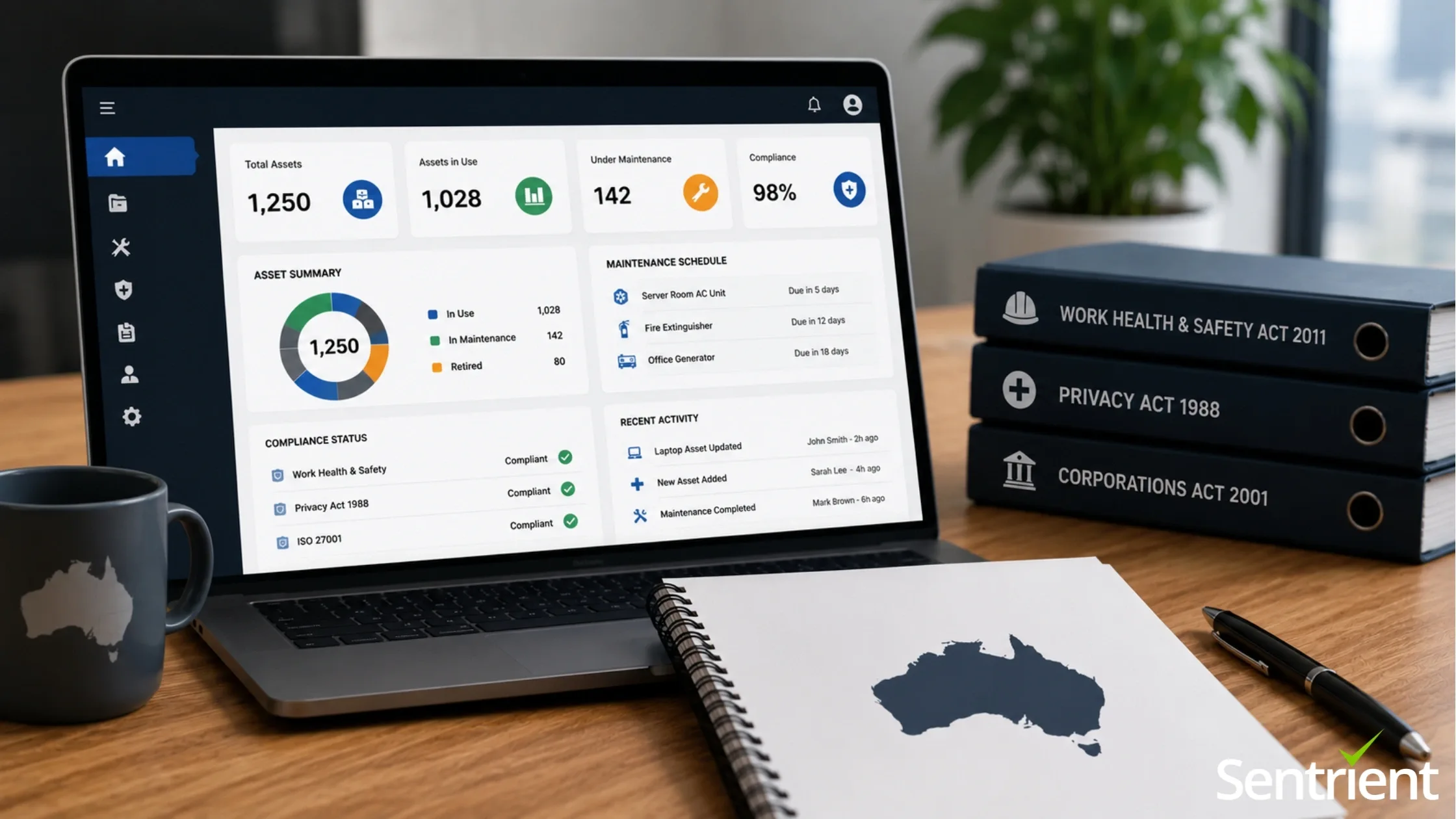
Asset Management Software Buyer’s Guide for Australian HR and Compliance Managers
Quick Note If you manage 50 to 500+ staff and need to evidence WHS, aged-care or Fair Work compliance, buy asset management software for compliance capability first and features second. Understand the three software categories (point solution, EAM/CMMS, and GRC platform with an asset management module), score vendors against eight Australian-context criteria, watch for five […]
5 Asset Management Mistakes That Create Legal Exposure For Australian Businesses
Quick Note Most asset management mistakes are quiet documentation failures that only surface when a regulator or an incident investigator arrives. The five that create the most legal exposure for Australian businesses are: running unregistered plant, keeping records that cannot survive scrutiny, reactive maintenance, informal asset disposal, and siloed records across departments. The common thread […]

Asset Management 101: The Complete Guide For Australian Businesses
If your organisation manages people, equipment, vehicles, facilities, or data, asset management is not just an operational concern. It is a compliance responsibility. And in Australia, the gap between organisations that manage it well and those that don’t is increasingly visible in audit outcomes, workplace incident investigations, and regulator activity. This asset management 101 guide […]
What Is An Online Asset Management System? Everything Australian Businesses Need To Know
Ask any HR manager running 100+ staff how they’re tracking assets, and you’ll get one of two answers. Either a pause and a slight grimace, or the words “we have a spreadsheet for that”. Both answers mean the same thing: nobody knows where everything is, who has it, or whether it’s coming back when someone […]
MOST POPULAR POSTS